Loan-to-Value Ratio (LTV)
Definition and meaning of Loan-to-Value Ratio (LTV) in real estate.
The loan-to-value ratio is a key underwriting metric that measures the proportion of a property's value that is financed by a mortgage loan.
In more detail
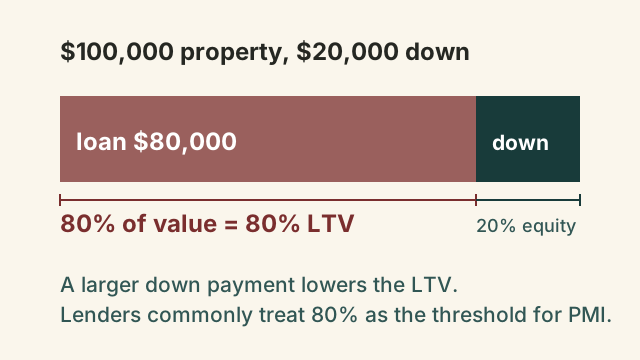
This ratio is expressed as a percentage and is one of the primary factors lenders use to determine borrower eligibility and loan pricing. A lower ratio means the borrower has more equity in the home, which reduces the lender's exposure to loss. If the ratio exceeds eighty percent on a conventional loan, lenders will require private mortgage insurance to mitigate their risk.
Lenders determine the property value using the lesser of the sales price or the appraised value to protect themselves against overpaying for a home.
Key facts
| Category | Mortgages & Financing |
|---|---|
| Calculation | Loan amount divided by the lower of sales price or appraised value |
| Critical limit | Eighty percent conventional loan threshold for private mortgage insurance |
| Used for | Assessing risk during the underwriting process |
An investor buys a commercial property with a down payment of twenty percent, establishing an eighty percent loan-to-value ratio on the mortgage.
Frequently asked questions
What is a good loan-to-value ratio?
Generally, an LTV ratio of eighty percent or lower is considered ideal because it helps borrowers avoid the cost of mortgage insurance and qualify for lower interest rates.
Can you refinance with a high loan-to-value ratio?
It is more difficult to refinance with a high LTV ratio, but certain government programs may allow it even if the borrower has little to no equity.