Cul-de-sac
Definition and meaning of Cul-de-sac in real estate.
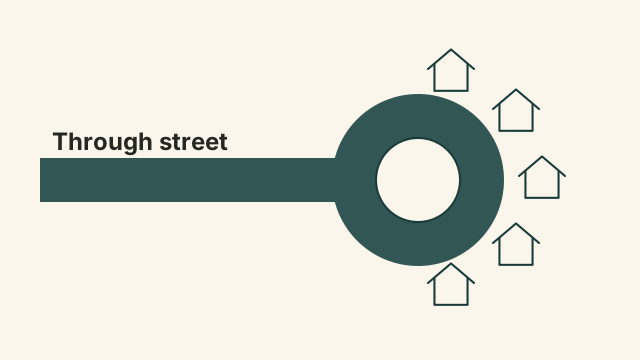
A cul-de-sac is a dead-end street with a wide, circular turnaround at the closed end, designed to allow vehicles to exit easily without backing up.
In more detail
Originally developed to reduce through-traffic in suburban neighborhoods, these streets are highly popular among home buyers with families. The lack of passing vehicles makes the street quieter, safer, and cleaner compared to traditional grid streets. Homes situated on a cul-de-sac often have pie-shaped lots with narrow front yards and wider backyards.
In many real estate markets, homes on these streets command a premium price because of the perceived safety and privacy they provide.
Key facts
| Category | Property Types & Construction |
|---|---|
| Origin | French term meaning bottom of the bag |
| Main benefit | Reduced traffic, enhanced safety, and privacy |
| Lot shape | Often features pie-shaped lots |
A family chooses to buy a home located on a quiet cul-de-sac so their children can play outside without worrying about high-speed traffic.
Frequently asked questions
What are the main disadvantages of living on a cul-de-sac?
Disadvantages can include limited street parking, challenges for snowplows or garbage trucks to turn around, and a longer drive to exit the neighborhood.
Do homes on a cul-de-sac have higher resale value?
Yes, homes on these streets typically sell for a premium compared to identical homes on busy through-streets due to high buyer demand.
How does a cul-de-sac affect a home's front yard?
Because of the circular street layout, front yards are often narrow, while the backyards tend to open up and be much wider.